
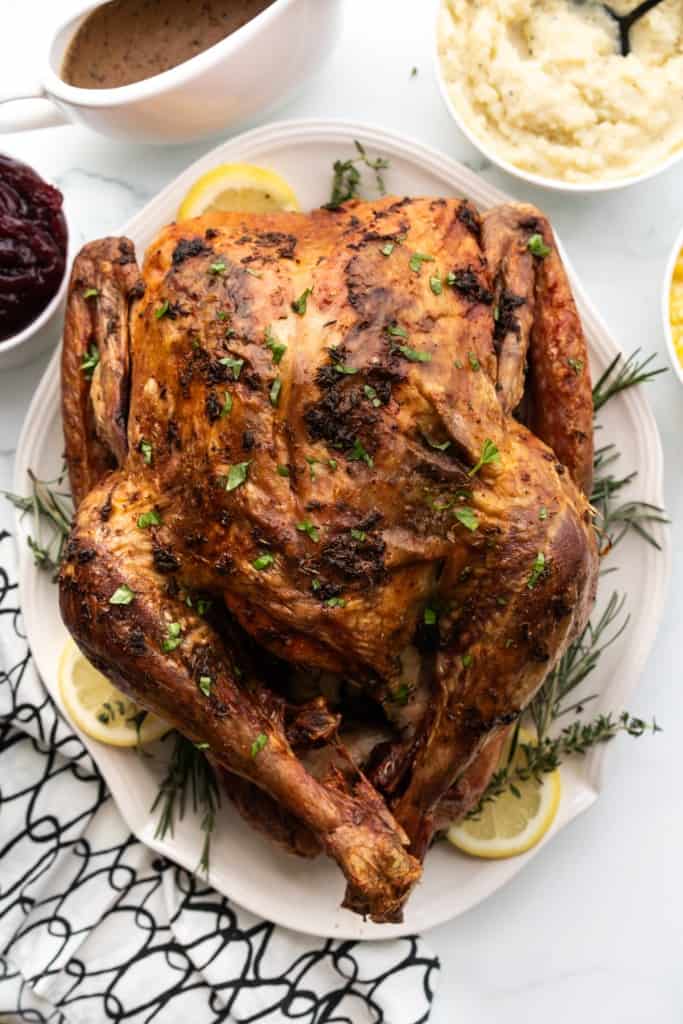
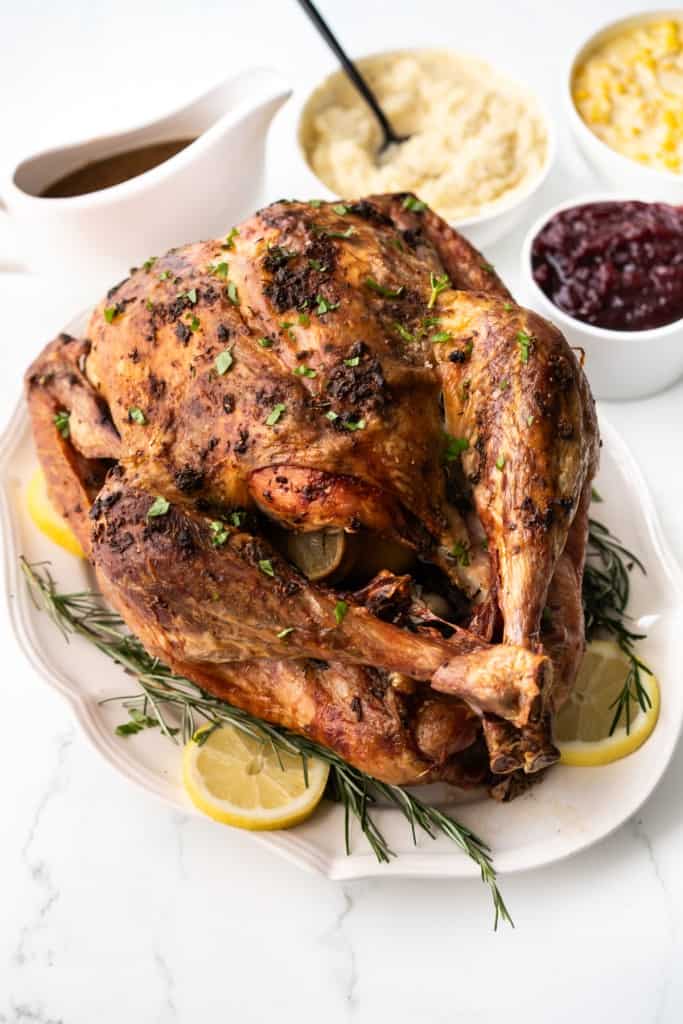
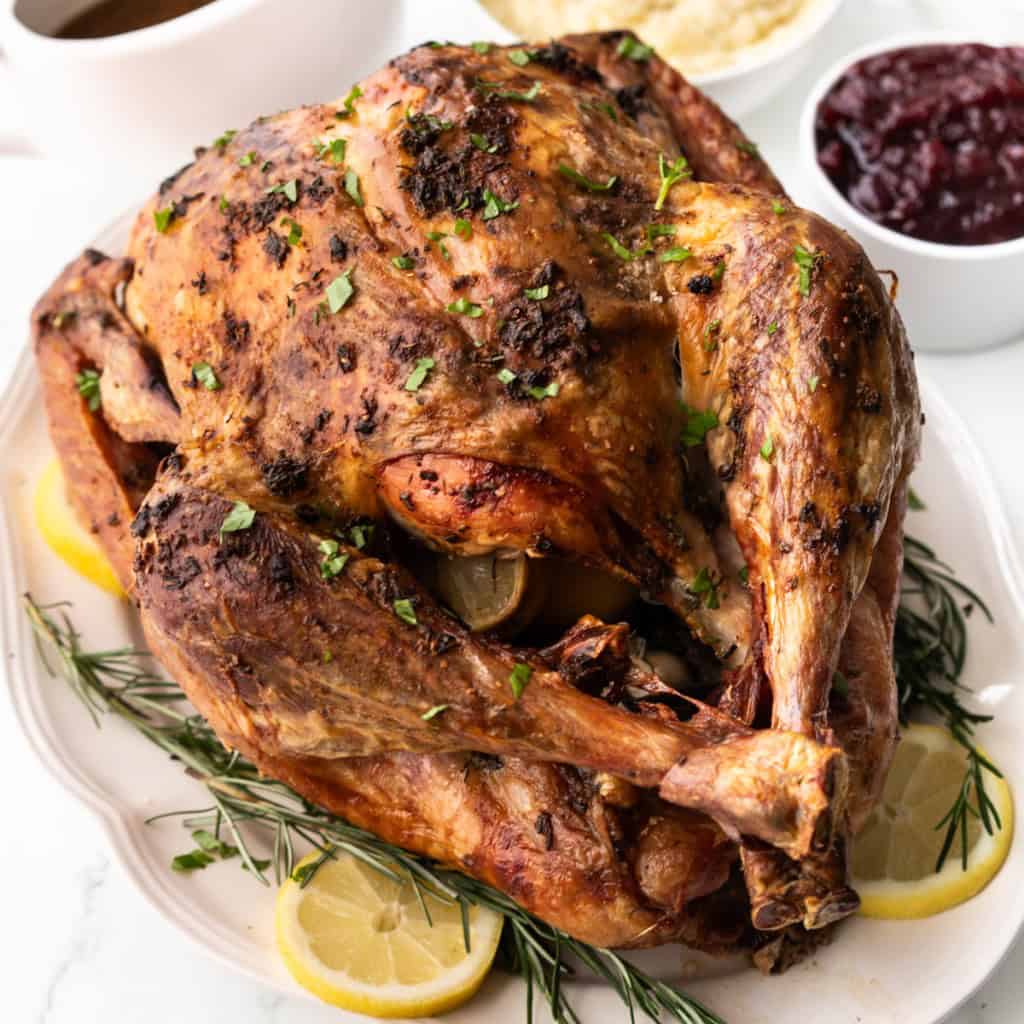
This fabulous Dry Brine Turkey will be the star of any Thanksgiving meal. Juicy, golden roasted turkey dry brined with salt and covered in a garlic herb butter rub – then roasted low and slow for incredibly moist meat and crispy skin.
Below, I’m walking you through step-by-step on how to dry brine a turkey. You’ll also find handy charts for thaw times and turkey cook time by weight, so your Turkey Day goes smoothly with minimal stress!
Round out your Thanksgiving table with my Apple Stuffing, Fresh Green Bean Casserole, Creamy Mashed Potatoes, and some Pumpkin Pie!
Dry Brining a Turkey

Roasting a whole turkey can feel like the most nerve-wracking part of the holiday. Everyone’s waiting, and it’s the centerpiece of the whole meal!
I was very intimidated by the thought of roasting a whole bird, until I realized that with proper techniques and some practice, it is actually not that hard. Just like my Spatchcock Turkey recipe, I’m always trying to find the easiest, most effective ways to make a perfectly roasted turkey.
Over the years, I’ve experimented with so many ways to make the perfect Thanksgiving turkey, and I always come back to this dry brine turkey. Most of the work happens the day before, so on the big day you’re just buttering, stuffing the cavity with aromatics, and letting the oven take over.
So what exactly is a dry brine? A dry brine is simply salting meat ahead of time and letting it rest in the fridge. The salt first draws moisture out, then that salty liquid gets reabsorbed into the meat, seasoning it all the way through.
Unlike a wet brine, you do NOT soak the bird in salt water, so the skin stays drier. That means crispier, more golden skin in the oven… and way less mess.
Another important component is the garlic herb butter. Tucked under the skin, it bastes the meat as it roasts and fills your whole house with the smell of garlic, rosemary, thyme and sage.
This is the ultimate Thanksgiving turkey recipe. If you’re cooking for a smaller crowd, my Juicy Dutch Oven Turkey Breast is a wonderful option too.


Ingredients For The Best Dry Brine Turkey
Simple pantry staples plus a handful of fresh herbs are all you need. Exact amounts are in the recipe card at the bottom of the post.
For The Brine
- Salt: The only thing you need for the dry brine! Kosher salt is the best choice because it sprinkles evenly and is easy to control. If you use table salt, use less, since it’s much saltier by volume.
- Whole turkey: This recipe is written for a 16 lb bird, but it works for any size. Make sure it’s fully thawed, and remove the neck and giblets from the cavity first.
For The Garlic Butter Compound
- Salted butter: Softened to room temperature so it mixes easily and spreads smoothly under the skin. If using unsalted butter, make sure to add a pinch of salt to the compound butter.
- Garlic: Freshly minced garlic gives the best flavor. Don’t be shy here – it mellows beautifully as it roasts.
- Fresh thyme: Earthy and classic with poultry. Strip the leaves off the stems before mincing. In general fresh herbs yield the best flavor so use that instead of dried herbs if possible!
- Fresh rosemary: Adds that cozy, piney holiday flavor. Mince it finely since the leaves can be tough.
- Fresh sage: The flavor of Thanksgiving! It pairs perfectly with the garlic and butter.
For Roasting
- Chicken broth: Poured into the bottom of the pan to keep the turkey moist and stop the drippings from burning. Bonus: it makes for amazing gravy.
- Lemons: Halved and tucked into the cavity to add a subtle brightness from the inside out.
- Head of garlic: Halved crosswise and added to the cavity for even more aromatic flavor.
- Fresh herb sprigs: Extra thyme, rosemary and sage go into the cavity alongside the lemon and garlic.
How Long To Thaw A Turkey
A turkey needs to be fully thawed before you dry brine it, so plan ahead! These timelines follow USDA guidance.
Ideally, thaw your turkey in the refrigerator. If in a pinch, the cold water thawing method is a quicker option.
The general rule of thumb for refrigerator thawing is 24 hours for every 4-5 pounds of turkey.
| Turkey Weight | Refrigerator Thawing | Cold Water Thawing |
|---|---|---|
| 4-12 lbs | 1-3 days | 2-6 hours |
| 12-16 lbs | 3-4 days | 6-8 hours |
| 16-20 lbs | 4-5 days | 8-10 hours |
| 20-24 lbs | 5-6 days | 10-12 hours |
In cold water: Keep the turkey in its wrapping, submerge it in cold tap water, and change the water every 30 minutes. Allow about 30 minutes per pound, and cook it right away once thawed.
For a 16 lb turkey, that means moving it from the freezer to the fridge about 4 days ahead, plus one extra day for the dry brine. Never thaw a turkey on the counter at room temperature.
How To Make It
Step 1: Dry Brine the Turkey
Place the turkey on a roasting pan, ideally on a rack. Pat it completely dry with paper towels, inside and out. There’s no need to wash the turkey either.
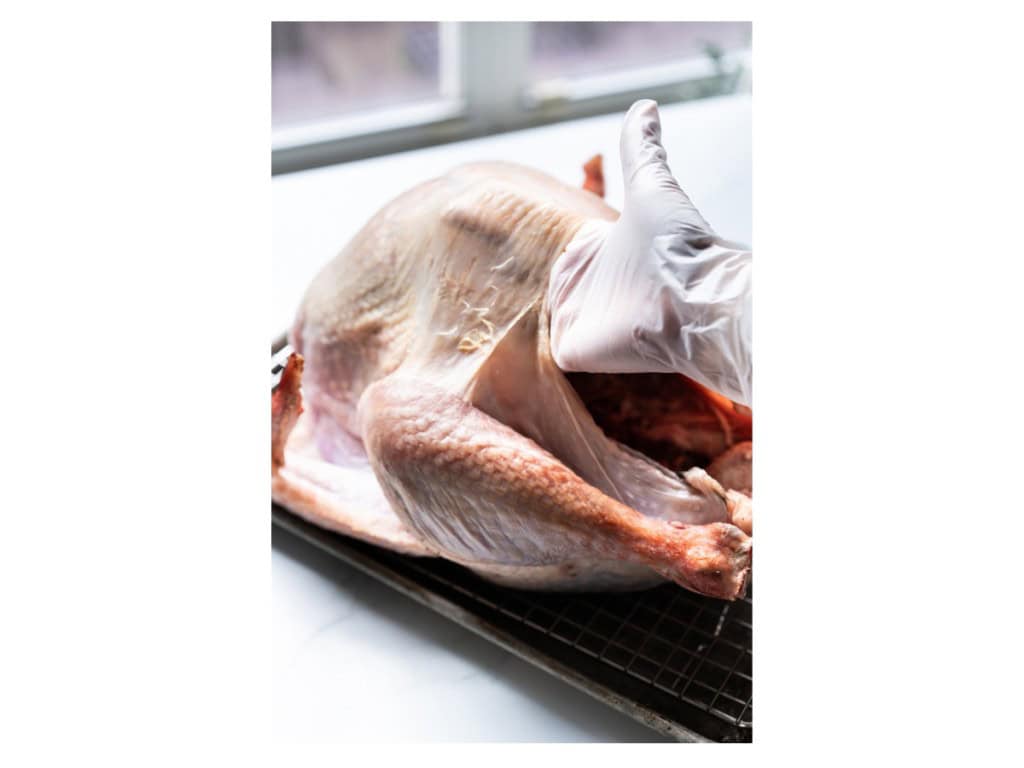
Gently loosen the turkey skin from the breast and thighs by sliding your fingers underneath. Go slowly and try not to rip the skin.
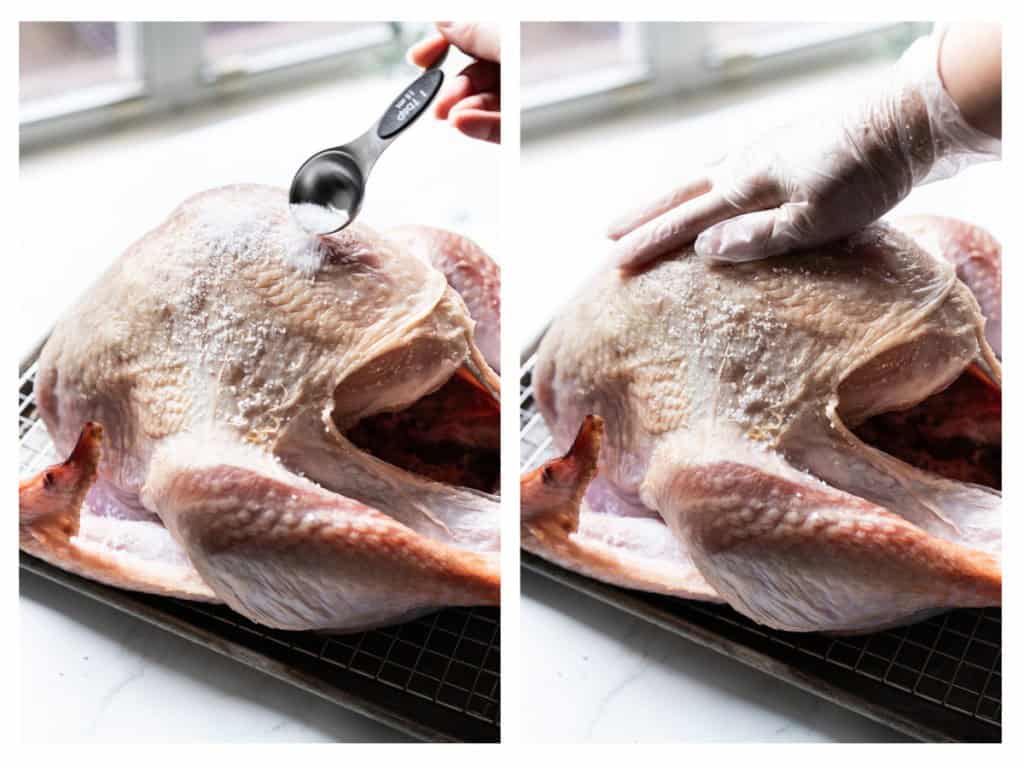
Sprinkle the salt evenly all over the turkey, including the back, the legs and inside the cavity. Add salt and rub under the skin as well.
The general rule for dry brining is 1 tbsp of salt for every 4 lbs of turkey.
Let it brine, uncovered, in the refrigerator for at least 24 hours for best flavor and skin texture. You can brine it for up to 3 days.
Step 2: Bring Turkey Out of the Fridge
When you’re ready to roast, preheat the oven to 425°F.
Take the turkey out of the fridge and let it sit at room temperature for about 1 hour before roasting. Do NOT rinse off the brine.
Step 3: Season Turkey with Herb Garlic Butter
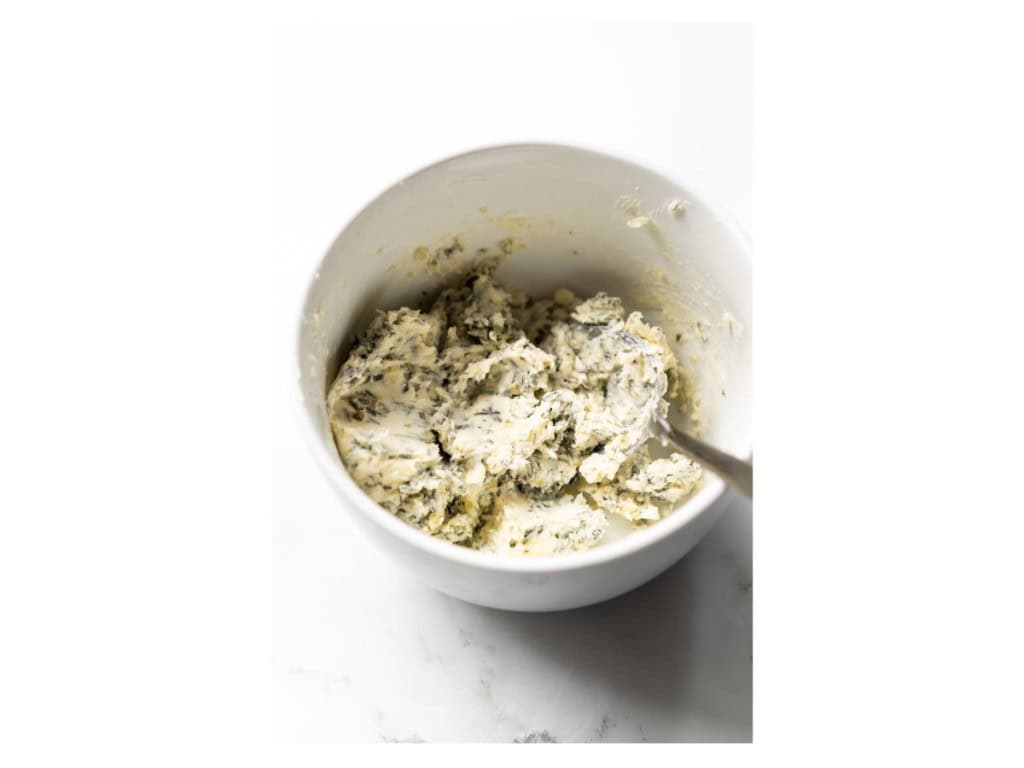
While the turkey warms up, mix the softened butter, minced garlic, thyme, rosemary, and sage in a small bowl until well combined.
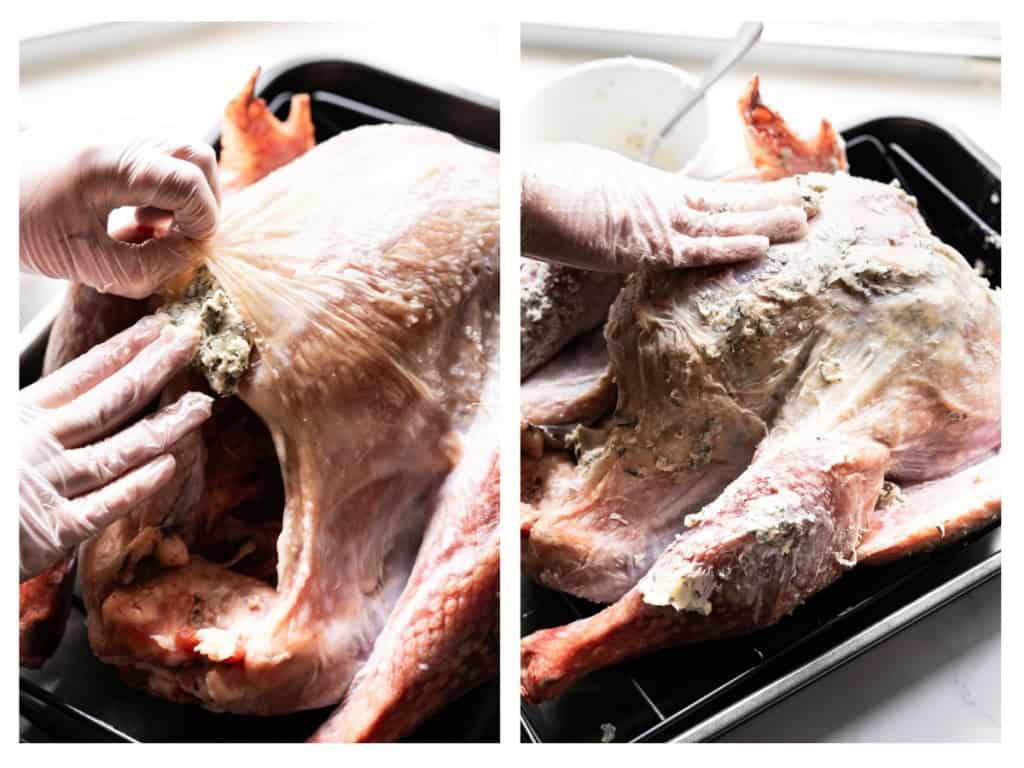
Using your hands, rub the garlic butter compound under the skin as evenly as you can. Smear any leftover butter over the outside of the skin.
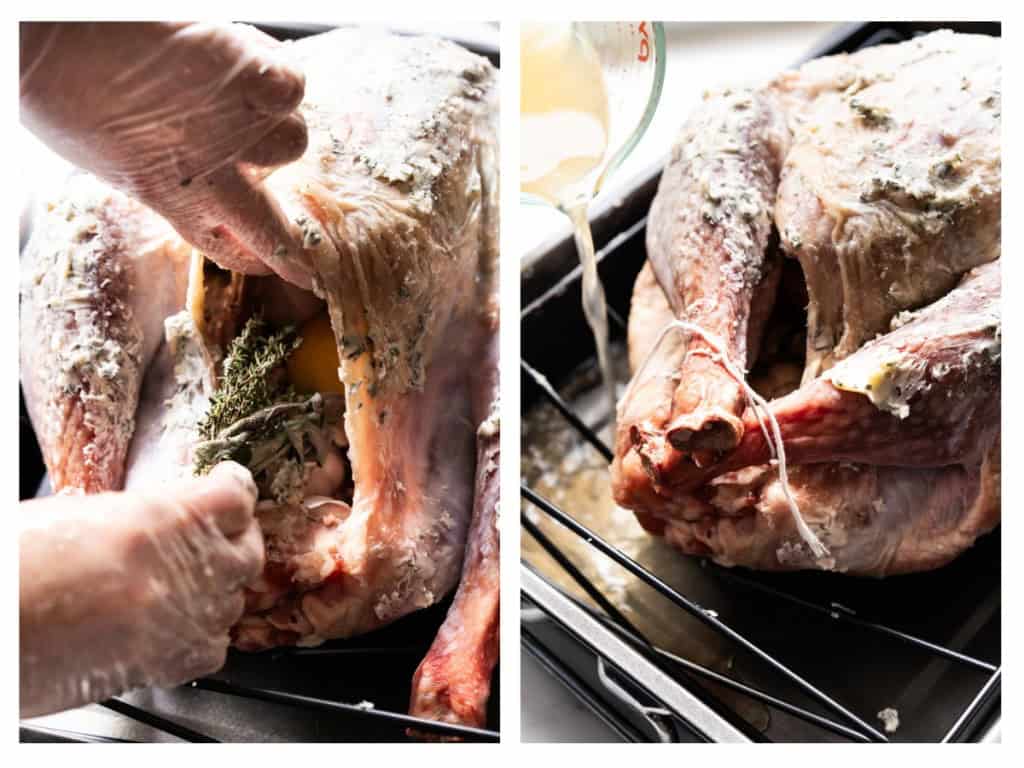
Place the lemon halves, head of garlic halves, and the herb sprigs inside the turkey cavity.
Tie the legs together with twine and tuck in the wings as best as you can.
Pour the chicken broth into the bottom of the roasting pan.
Step 4: Roast the Turkey
Place the turkey in the oven and roast for 20 minutes to get the skin going.
Reduce the oven temperature to 350°F and keep roasting. Start checking for doneness at around 2 hours, but expect a larger bird to need more time – use the cook time chart below as your guide.
The 2 hour mark (plus the 20 minutes on higher heat) is on the low end for a 16 lbs bird.
Check the pan every so often and add more broth if it’s getting dry. If the skin is browning too quickly, loosely tent the breast with foil.
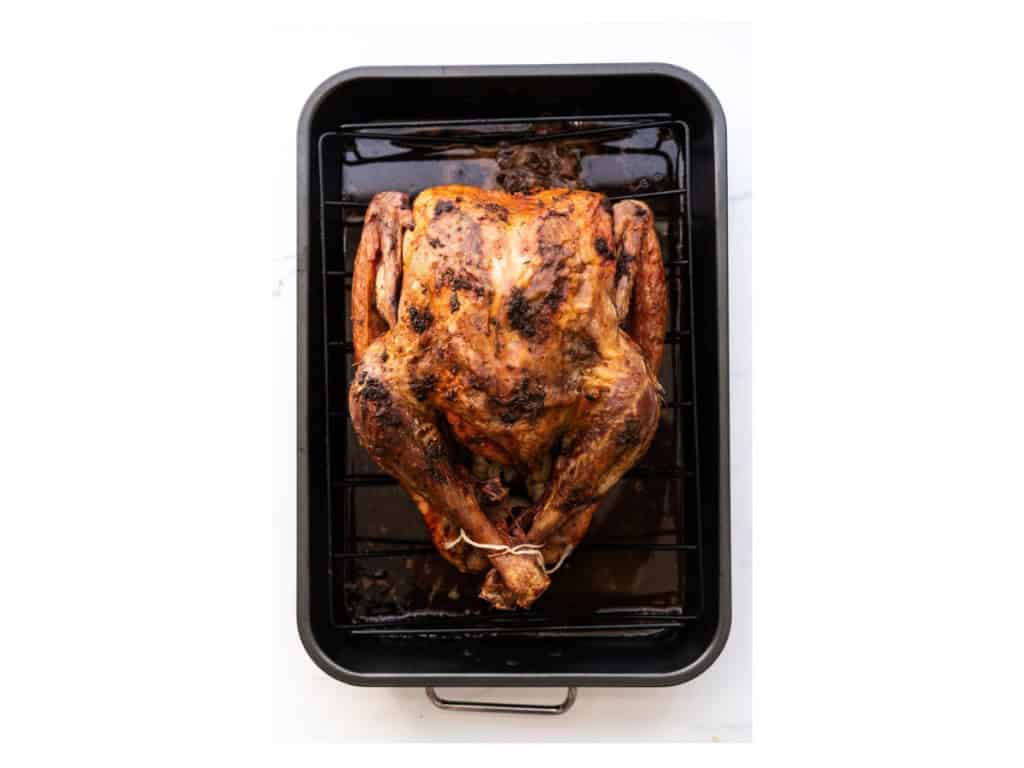
The turkey is done when a meat thermometer reads 165°F in the thickest part of the thigh (not touching the bone) and in the thickest part of the breast. An instant-read meat thermometer takes all the guesswork out of it!
Turkey Cook Time By Weight
Every oven and every bird is a little different, so always go by temperature, not just time. Note that cook time shown is the total time (that means it includes both the 20 minutes at 425°F and the rest of the time at 350°F ).
| Turkey Weight | Approximate Cook Time |
|---|---|
| 10-12 lbs | 1 3/4 – 2 1/4 hours |
| 12-14 lbs | 2 1/2 – 3 hours |
| 14-18 lbs | 3 – 3 3/4 hours |
| 18-20 lbs | 3 1/2 – 4 1/4 hours |
| 20-24 lbs | 4 1/4 – 4 3/4 hours |
Start checking the temperature about 45 minutes before the low end of the range, then keep checking every 15-30 minutes until the internal temperature of the thickest part (usually the breast) hits 165°F.
Step 5: Rest Turkey
Let the turkey rest, loosely tented with foil, for 20-30 minutes before carving. This lets the juices settle back into the meat so it stays juicy.
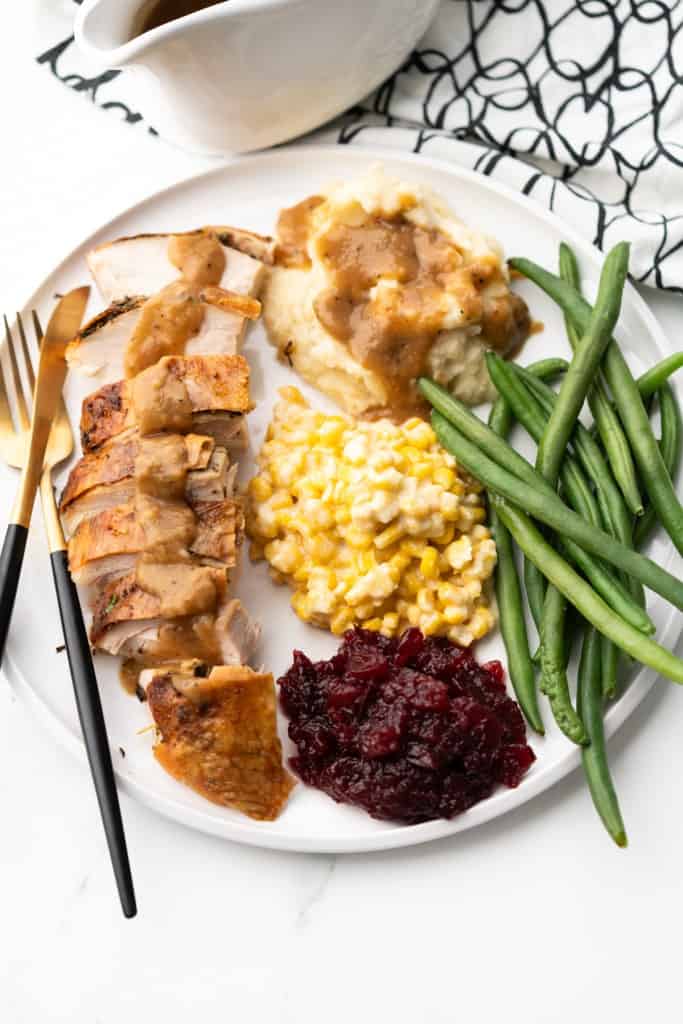
Carve, serve with cranberry sauce, gravy, stuffing and all your favorite Thanksgiving sides…and enjoy!
Variations And Substitutions
Make this dry brine turkey your own with a few easy swaps.
- Herbs: Swap the fresh herbs for dried, using about a third of the amount, or stir a little poultry seasoning into the butter. Other herbs to use include
- Citrus: Use oranges instead of lemons in the cavity for a slightly sweeter, festive flavor.
- Butter: Unsalted butter works great too. Since the turkey is already brined, there’s no need to add extra salt.
- Seasoned brine: Mix black pepper, garlic powder or a pinch of smoked paprika into the salt for an extra layer of flavor.
- Dairy-free: Use a plant-based butter or olive oil in place of the butter. Butter will give the best flavor if you are able to use it.
- Roasting Liquid: If it dries out, add more! When it’s done, use the dripping to make a delicious gravy.
- Spatchcock: Want it done faster? Try my Spatchcock Turkey – flattening the bird cuts the roasting time way down.
- Turkey breast: Feeding a smaller crowd? My Dutch Oven Turkey Breast uses the same cozy herb butter flavors.
Make Ahead, Storage, And Reheating
Make ahead: The dry brine itself is your make-ahead step! You can also mix the garlic butter compound up to 3 days ahead and keep it covered in the fridge. Let it soften before using.
Storage: Store leftover turkey in an airtight container in the fridge for 3-4 days. Refrigerate it within 2 hours of cooking.
Freezing: Freeze carved turkey in freezer bags for up to 3 months for best quality. A splash of broth in the bag helps keep it moist.
Reheating: Place sliced turkey in a baking dish with a little chicken broth, cover with foil, and warm at 325°F until heated through.
How To Serve
Serve this roasted turkey with all the classic Thanksgiving sides: Cheesy Mashed Potatoes, Fresh Green Bean Casserole, and Sweet Potato Casserole with Pecans.
Don’t forget to save those pan drippings for homemade gravy… it’s liquid gold!
Tips and Tricks
- Thaw completely: Salt can’t work evenly into a partly frozen turkey, so make sure it’s fully thawed before you start the dry brine.
- Pat it dry: Dry skin = crispy skin. Pat the turkey dry before salting and again before roasting.
- Leave it uncovered: Brining uncovered in the fridge dries out the skin so it roasts up extra golden and crisp.
- Don’t rinse: The salt has already worked its way into the meat. Rinsing just wets the skin and splashes raw turkey juices around your sink. There’s no need to rinse or wash the turkey before salting it either.
- Use kosher salt: It’s easier to sprinkle evenly than table salt, and much harder to over-salt with.
- Skip extra salt: Between the brine and the salted butter, your turkey is well seasoned. Do NOT add more salt before roasting.
- Limit counter time: About 1 hour out of the fridge is plenty. USDA recommends keeping raw poultry out of the fridge for no more than 2 hours.
- Go by temperature: Every turkey is different, so trust your meat thermometer over the clock. Check the thigh and the breast.
- Tent with foil: If the skin is getting too dark before the turkey is done, loosely cover the breast with foil.
- Let it rest: Resting for 20-30 minutes keeps all those juices in the meat instead of on your cutting board.
Frequently Asked Questions
A wet brine soaks the turkey in salt water, while a dry brine is just salt rubbed directly on the bird. A dry brine takes up less space, makes less mess, and gives you crispier skin.
No! Rinsing adds moisture back to the skin and can spread bacteria around your kitchen. Just pat the turkey dry with paper towel if it looks wet.
No, the turkey needs to be fully thawed first so the salt can work evenly into the meat. Check the thawing chart above to plan ahead.
Kosher salt is best because the larger flakes are easy to sprinkle evenly. Table salt is much saltier by volume, so if you use it, use less.
Leave it uncovered on a roasting pan or rack in the fridge. This helps dry out the skin, which is the secret to crispy, golden skin.
Yes, unsalted butter works perfectly. The turkey is already seasoned from the brine, so you don’t need to add any extra salt to the butter.
Use a meat thermometer. The turkey is done when it reads 165°F in the thickest part of the thigh (not touching bone) and in the thickest part of the breast.
Let it rest for 20-30 minutes, loosely tented with foil. It will stay plenty warm and the meat will be much juicier.
This recipe uses lemons, garlic and herbs in the cavity instead. You can stuff the turkey in place of that. However, for food safety and even cooking, you will most likely need to roast your turkey for longer if it is stuffed.
Here are ways to make sure turkey comes out moist and juicy
– Do NOT overcook the turkey – use a meat thermometer to check for doneness. Once the thickest point hit 165°F, pull turkey from heat immediately.
– Rest before carving. Give it at least 30 minutes. Tented loosely with foil, it’ll stay hot. Carving right away lets the juices run out onto the board.
– Dry brine! This is one of the key reasons why we do it! 🙂
Absolutely! The broth and drippings in the bottom of the pan make an incredibly flavorful base. Follow my How to Make Gravy from Scratch guide.
ENJOYED THIS RECIPE? Tell us what you think by leaving a rating and review below! 🤍
More Thanksgiving Recipes
- Caramelized Onions Sautéed Green Beans
- Mascarpone Mashed Potatoes
- Cinnamon Brown Sugar Mashed Sweet Potatoes
- Slow Cooker Creamed Corn
- Fall Harvest Salad
- Roasted Brussels Sprouts and Sweet Potatoes
Leftover Turkey Ideas
If you have leftover turkey, transform it into these delicious recipes!
Dry Brine Roasted Turkey
Equipment
Ingredients
Brine
- 4 tbsp salt
- ~16 lb turkey
Garlic Butter Compound
- 1 stick salted butter softened
- 6-7 cloves garlic minced
- 1 tbsp fresh thyme chopped
- 1 tbsp fresh rosemary chopped
- 1 tbsp fresh sage chopped
Other
- 4 cups chicken broth or more if needed
- 2 lemons halved
- 1 head garlic halved
- fresh thyme
- fresh rosemary
- fresh sage
Instructions
- Place turkey on roasting pan. Gently loosen the turkey skin. Try not to rip the skin. Rub salt all over, including under the skin. Let brine for at least 20-24 hours.
- Before roasting, remove from refrigerator for 1 hour and let turkey sit in room temperature
- Preheat oven to 425℉.
- Bring compound butter mixture together in a bowl. Using hands, rub the garlic butter compound under the skin as best you can. Smear the leftover butter over the outside of the skin.
- While turkey is warming, mix softened butter, garlic, thyme, rosemary, and sage in a small bowl.
- Place lemon halves, garlic halves, thyme, rosemary, and sage in the cavity of the turkey. Pour chicken broth into the bottom of the roasting pan. Tie legs together with twine and tuck the wings as best as you can.
- Place in oven and roast for 20 minutes.
- Bump up the oven temperature down to 350℉. Continue roasting for 1 hour 45 minutes making sure to check to see if there is still chicken broth in the pan as it roasts. Once the time is complete, use a meat thermometer to check for doneness. The internal temperature should be 165℉.
- Allow to cool before carving.
- Serve and enjoy!
Recipe Notes
|
Turkey Weight
|
Approximate Cook Time
|
|---|---|
|
10-12 lbs
|
1 3/4 – 2 1/4 hours
|
|
12-14 lbs
|
2 1/2 – 3 hours
|
|
14-18 lbs
|
3 – 3 3/4 hours
|
|
18-20 lbs
|
3 1/2 – 4 1/4 hours
|
|
20-24 lbs
|
4 1/4 – 4 3/4 hour
|