
You are going to love this delicious Mango Sago recipe! This popular Asian dessert features fresh mangos chunks, sago pearls, coconut jelly, soaked in a rich and creamy sweet coconut sauce.
Enjoy this refreshing coconut mango sago dessert especially during the summer, when mangos are at its peak. This recipe is simple to prepare, calling for minimal ingredients. Mango sago is best served cold so there is ~2 hours of chill time – so be sure to plan ahead for that!

Coconut Mango Sago – an Asian Dessert
I wish I can put into words just how much I love this incredible mango sago dessert. It is refreshing and cooling, with lovely sweet tropical flavors of fragrant mangos combined with creamy coconut milk, chewy coconut jellies and soft sago pearls.
If you know me you know I love my mango desserts, everything from Mango Sticky Rice to Mango Crumb Bars. This is no exception!
I’ve had sago desserts growing up in Malaysia, but first came across the viral Mango Sago dessert from Instagram a while back and I knew I had to try it. It was so good and satisfying I’ve been making it non stop ever since.
Mango sago originated from Hong Kong, but this dessert is served in Asian dessert shops all over the world today. Sago is basically small tapioca pearls – very similar to boba that you find in bubble tea, just smaller in size. Sago is popular ingredient across Asia and is often added to to desserts and drinks.
After making this mango sago dessert so many times, I’ve find myself making it this way that it is simple yet retains all the amazing flavors! Here are a couple of notes about this coconut mango sago recipe:
- EASY, kinda ‘short-cut’ method: Just boil the sago, dump everything into a bowl, and chill! But no worries, it retains everything we love about mango sago…just much easier to make than some recipes.
- Skip the mango puree: Instead, just cut up more mangoes and add them fresh into the coconut milk base. One less step, and honestly I rather have more mango chunks!
- Drain the coconut jelly: some recipes use the sweetened liquid from jelly but I prefer it without it! I just don’t love the fake syrup flavors from the jelly liquid. Without the liquid mango sago comes out a bit thicker but if you want your mango sago more diluted, add ice instead!
I love to enjoy my coconut mango sago dessert cold, straight from the fridge. The lovely tropical flavors always refresh my palette and it’s really the perfect way to cool down during the summer months, because we sure need it in this Texas heat!
Mango Sago is perfect for parties and gatherings because you can combine all the ingredients in a large bowl beforehand and have guests grab as much as they want.
Ingredients
The ingredients used to make mango sago dessert are simple, straightforward and easy to find:
- Mangos – I use about 4-5 fresh ripe, mangos. Or more if you prefer! You really can’t go wrong with more mangoes. You’ll want the mangoes ripe and super sweet for best flavor. Avoid green, underripe mangoes.
- Sago – these are small round white balls that is a key ingredient in this mango sago dessert. They have a chewy consistency to them. You should be able to find sago in most Asian grocery stores or online here.
- Coconut Jelly – these are small, chewy and sweet jelly cubes that is made from coconut water. They are submerged in liquid and typically comes in a can or jar. I always get mine from an Asian grocery stores.
- Condensed milk – sweetened condensed milk will brings some sweetness and creaminess to our mango sago dessert.
- Coconut milk – canned coconut milk is used in this recipe. This is the thick, creamy full-fat coconut milk not the diluted kind you get in a carton.
How to make Mango Sago
Step 1: Cooking the sago pearls
The first thing we will need to do is to cook the sago pearls in boiling water until they are soft. The ratio of sago to water should be at least 1:6 because the sago will absorb most of the water in order to cook.
Bring the 6 or 7 cups of water to a boil then add sago pearls, cook for 10-12 minutes or until the pearls turn from white to mostly translucent with a tiny white dot in the center (see the picture on the left below).
Switch off heat and cover pot, letting the steam cook the sago pearls the rest of the way. This will take about 10-15 minutes.
When it is done, sago will be thick, sticky and gooey. It will also expand quick a bit!
Drain excess water from cooked sago and rinse with cold water to prevent sago from cooking further.
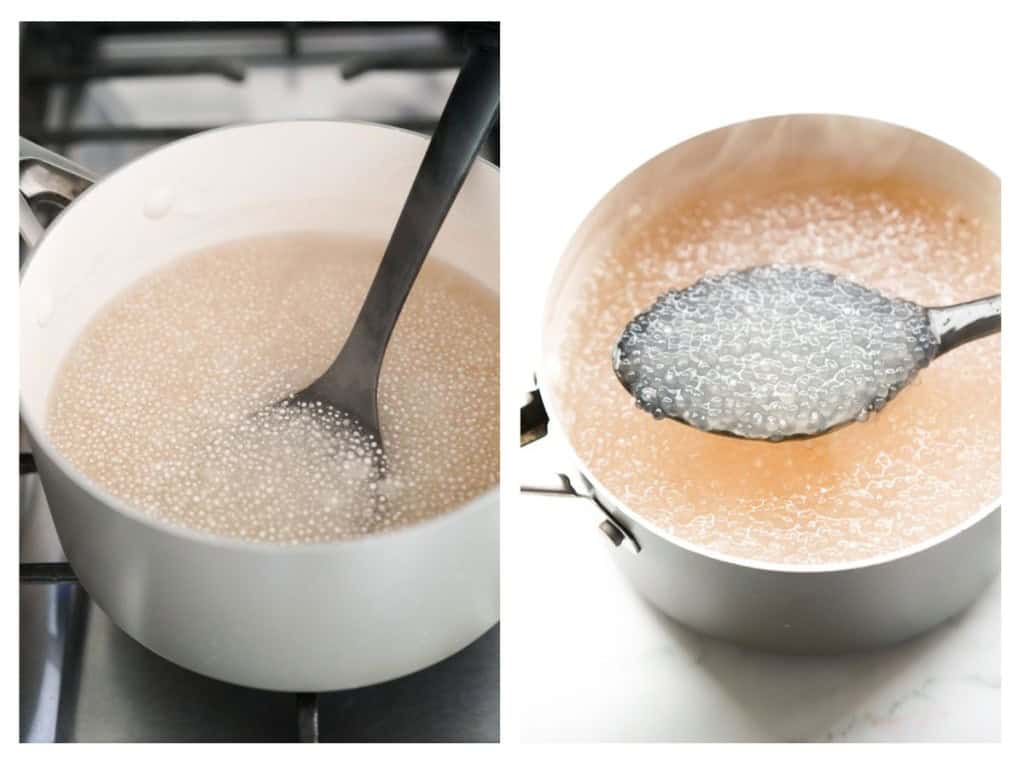
When sago is fully cooked, it should be soft and chewy and no longer hard when bitten into. Sago would also absorbed most if not all the water it was boiling in. If there is excess water, drain with a colander.
Step 2: Combine everything!
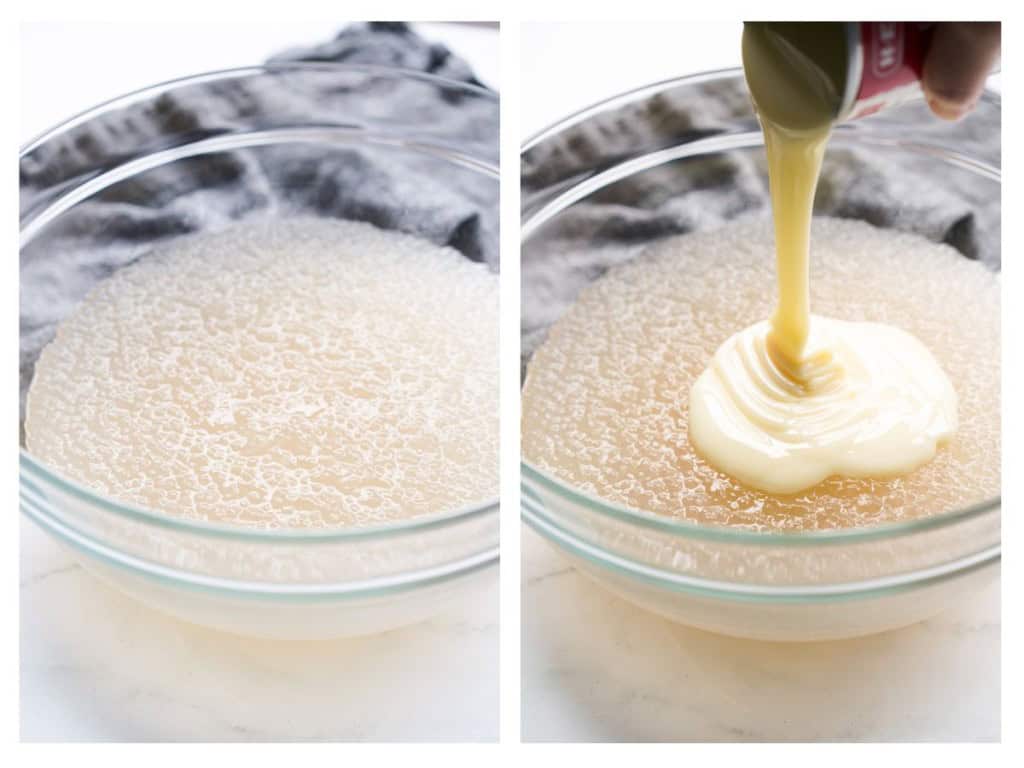
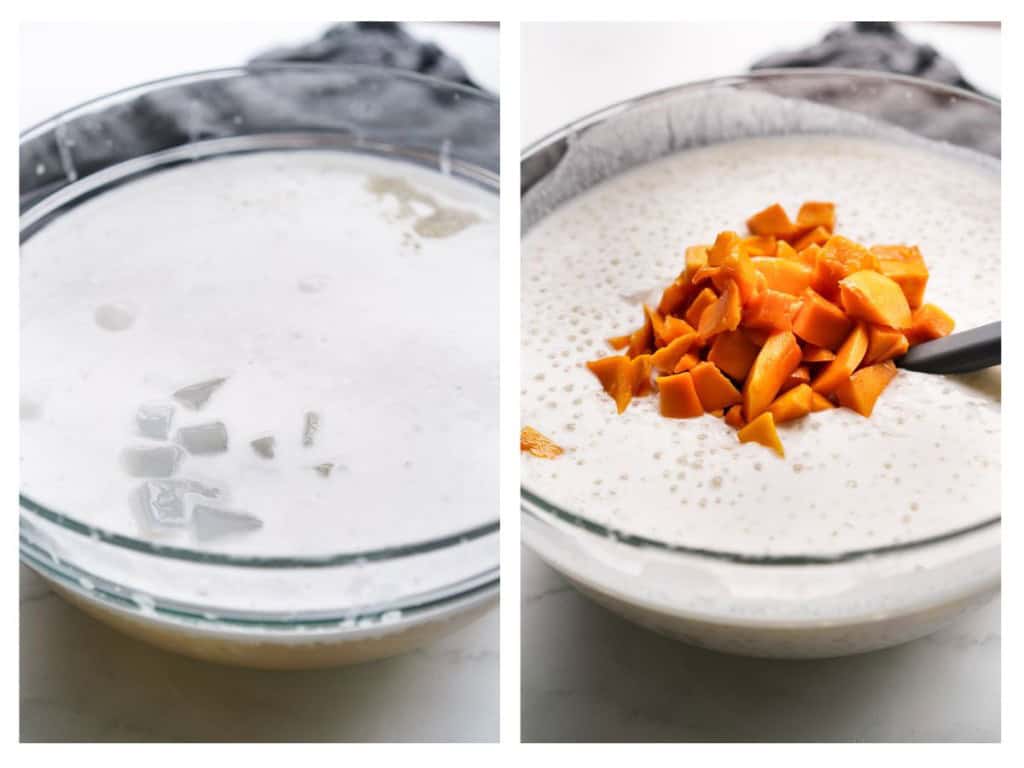
Once sago is cooked, add sago, cubed mangos, coconut jelly, condensed milk, and coconut milk to a large mixing bow. Stir to combine.
Step 3: Chill in refrigerator
Chill mango sago mixture for at least four hours. I typically just leave it in the large mixing bowl (covered) in the refrigerator.
When it is ready to be served, give it a stir, adding ice to dilute it if you prefer your sago pudding more siluted.
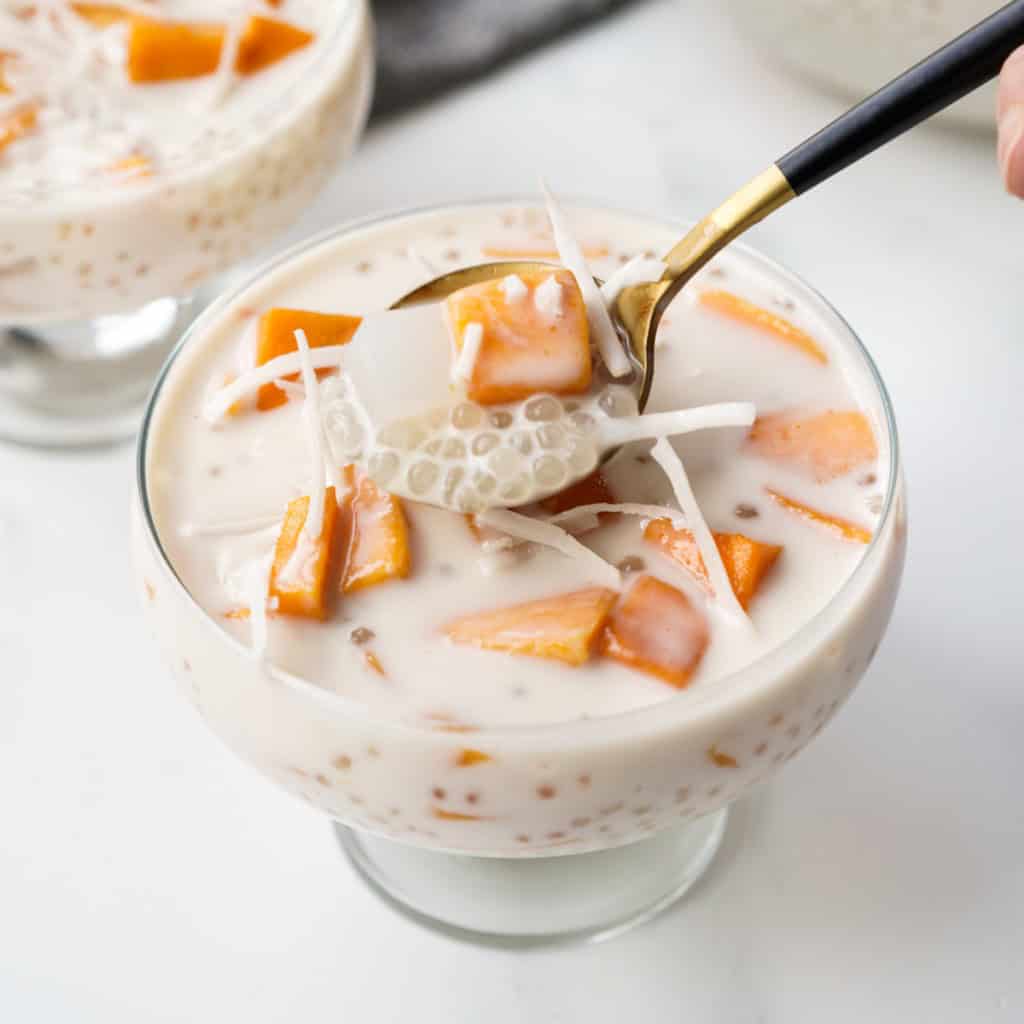
Serve by scooping mago into individual bowls, top it with more mangos, and sprinkle of shredded coconut if you’d like.
Trust me, it tastes as good as it looks!

While mango sago dessert is perfect year round, I really love it during the summer months because it cools and refreshes me on the super hot day.
That lovely combination of sweet mangoes and creamy coconut milk is just out of this world. The addition of that chewy sago and soft coconut jelly takes it to the next level. There’s nothing quite like it!
Variation and Substitution
There are so many ways you can jazz up your coconut mango sago recipe…here are some suggestions!
- Making a mango puree: If you prefer to add more mango flavor to the coconut milk based, considering blending 1-2 mangos to make a mango puree. I often skip this step because it is a lot more work, and personally, I rather slice up fresh mango chunks and add to the coconut sauce rathen than to add a pureed version.
- Adding other ingredients: This is an easy add. Feel free to bring other fruits such as honeydew, strawberries, peaches, pomelo (a popular add to make mango pomelo sago – a popular Hong Kong dessert) etc to the coconut milk mixture, or even add other items such as chia seeds, red beans, or a different type of jelly.
Storage Instructions
Leftover mago sago can be stored in the refrigerator for up to 5 days.
If you are making it ahead of time, I would serve it in under 24 hours. If you are making it ahead for longer, consider storing the components separately as sago will expand as it sits in the liquid and thicken the mango sago pudding.
Avoid freezing your mago sago.
Tips and Tricks
- Choose ripe mangoes: Use perfectly ripe mangoes as they are sweeter and more flavorful.
- Use thick coconut milk: Full fat canned coconut milk will yield the creamiest texture. This is different from carton coconut milk which is typically diluted.
- Plan ahead for chill time: Make it ahead of time and store in refrigerator for a few hours. Mango sago tastes best chilled.
- Boiling sago: When boiling sago in water, the sago to water ratio should be about 1:6 because the sago will absorb most of the water and expand as it boils. If not enough water is used, sago will not be able to fully cook.
- Rinsing sago after boiling: rinse sago in cold water after boiling to prevent it for cooking further.
- Chilling mango sago: After a few hours, sago tends to expand so your mango sago might be thicker after storing. Consider adding ice to thin if out if preferred.
- Experiment with ingredients: Add different ingredients for more texture and flavors: chia seeds, red beans, or canned or fresh fruits other than mango.
Frequently Asked Questions
Ripe, sweet, non-fibrous varieties are ideal. Alphonso, Ataulfo (honey mango), or Nam Dok Mai are top choices — they’re smooth, sweet and fragrant.
Yes! Fresh is always best but if you there are no ripe mangos in season, frozen or canned mangoes will work as well.
Yes — small white tapioca pearls are the most common substitute and work nearly identically. They cook similarly, look the same, and have almost the same neutral taste. Large black boba pearls can also be used for a bubble tea style version, but they have a chewier texture.
Clumping happens when pearls aren’t stirred during cooking or aren’t rinsed after draining. Always stir for the first minute of boiling, and rinse with cold water immediately after draining to wash off excess starch. Store cooked pearls in a bowl of cold water if not using right away.
No. Unfortunately sago turns grainy after freezing.
Yes! You can make it ahead of time and let it sit in the fridge for up to 24 hours. If you are making it more than 24 hours in advance, considering storing the component separately.
Sago expands and therefore thickening the coconut mango sago. Some people like it thicker but if you don’t, you can add ice cubes to your mago sago before serving.
Feel free to add more sago if you like it thicker, and use ice to thin it out if you prefer it more diluted.
ENJOYED THIS RECIPE? Tell us what you think by leaving a rating and review below! 🤍
Other Dreamy Desserts
- Strawberry Mousse
- Mason Jar Banana Pudding
- Individual Peach Cobbler
- Blueberry Galette
- Mango Crumb Bars
- Mango Sweet Sticky Rice
- Nutella Cookie Butter Banana Grilled Cheese
Mango Sago
Equipment
Ingredients
- 1 cup uncooked sago
- 4-5 mangos cubed
- 13.5 oz full fat coconut milk
- 14 oz sweetened condensed milk
- 12 oz coconut jelly drained
- ice cubes optional
- shaved coconut for garnish, optional
Instructions
- In a pot, bring 6-7 cups of water to a boil. Add the sago. Stir continuously and bring it to boil again. Lower heat and simmer for 10-12 minutes, or until they turn translucent and the centers are white. Turn off heat, cover, and let sit for ~10-15 minutes, or until sago is completely translucent. When sago is done, drain excess water and rinse with cold water using a colander.
- Put cooked and rinsed sago to a large mixing bowl. Add mangos, coconut milk, condensed milk, coconut jelly to the bowl. Stir to combine. Cover and chill for a couple of hours.
- Once chilled, scoop into a serving dish. Optional: add ice and top with shaved coconut.
- Serve and enjoy!






This mango sago was SO good! I made it today and we didn’t even chill it because we couldn’t wait to dig in! It was still absolutely delicious. The mangoes are sweet and juicy, the sago pearls have that perfect chewy bite, and the coconut jelly in the creamy sauce ties everything together so well. It’s light, refreshing, and seriously addictive.
The recipe was straightforward and easy to follow. My family loved it and it disappeared fast. I can’t wait to make it again!
Highly recommend!
Yay!! Thanks so much and I’m so happy to hear that!